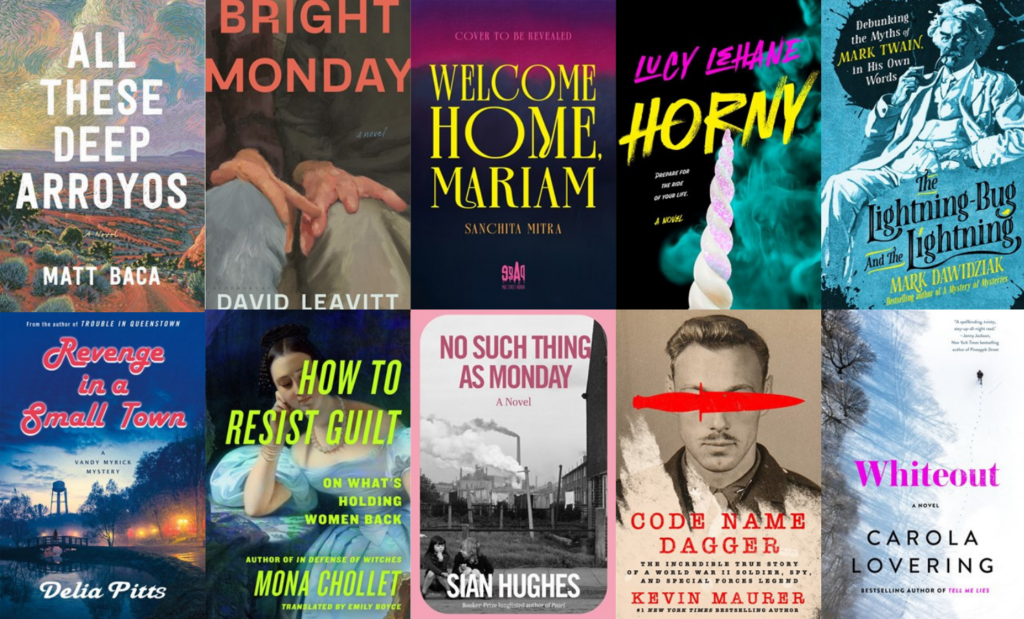
Before he’s sentenced to prison, Robin lives a hard, dried-out life in an adobe casita among the yuccas and cholla cactuses in the desierto alto, New Mexico’s high desert. But he also knows tenderness and love because of his traditional abuelos who raise him. And because of Cristina, a brilliant, fiercely independent girl from the Laguna Pueblo who insists she will be a scientist. Who insists Robin will be someone too. With her.
But just as Robin and Cristina start new lives in colleges far from home, they’re ripped apart. Robin is arrested and sentenced to federal prison because he’s fallen into one of his twin brother’s schemes. And because someone has died.
Now, seven years into Robin’s prison sentence, as Cristina has found new love, someone is secretly trying to free Robin. Someone—Robin can’t guess who—is working in the judge’s chambers, risking everything for Robin and Cristina, even as the judge’s suspicion grows. All because once, in the desierto alto, Robin and Cristina saved this friend first.
BRIGHT MONDAY by David Leavitt 9781639738632 | 1/12/27
Adam is translating into English his Italian friend Valeria’s new novel—a surprise bestseller she published under a pseudonym. Two days before he is scheduled to return home from Milan, he leans down to pet an especially sweet terrier and looks up to behold Francesco, the charismatic, rakish architect he hasn’t seen in three decades. When Francesco invites Adam to an Easter lunch with his family, including his wife and grandchildren, Adam finds himself drawn back into the affair that began in New York City at the height of the AIDS pandemic.
Alighting alternately on two historical moments, two cities, and two very different pandemics, BRIGHT MONDAYexplores with humor and compassion the ripple effects of a youthful entanglement born during one public health crisis and resurrected in the wake of another—a meditation on youth and memory shadowed by secrecy and denial yet illuminated by the persistent and bright possibility of rebirth.
When amnesiac Mariam returns to her rural childhood home, the family and medicine meant to heal her begin to strip away her sense of self, revealing that the greatest horrors grow from the places meant to keep us safe.
Left with no memory of her disappearance or the events preceding it, Mariam returns to her rural childhood home with her beloved Mother and Father, or at least a couple claiming to be. Once she arrives at their isolated farmhouse, vivid hallucinations start to fill the void left by her total amnesia. Mariam loses hours sleepwalking from one horror to another. Meanwhile, everyone seems eager to welcome Mariam home—from her parents to the neighbors and townspeople who stand on the property line, just watching. They leave flowers and extravagant gifts on the front step. They pry into her family’s affairs, into her rehabilitation. They pretend not to see Mariam deteriorate in front of them.
If this is a haunting, then exhumation will require Mariam to remember who she was before. And once she knocks enough dirt loose, her past self might just claw out of the grave to expose the carnivorous truth underneath the house’s floorboards.
Rachel’s death is going about as well as her life. Welcoming a poltergeist to share her body had its challenges, but she’s mostly figured those out: she’s got good friends, a room in a gorgeous apartment, and she’s well on her way to regaining the career her death derailed. What she doesn’t need is a strange, inhumanly beautiful new roommate – a unicorn – with a million odd questions about the human world – especially one who can peer into Rachel’s soul and see each of her dark, dirty secrets.
Isolde has been tempted by the human world for longer than she can remember. The land of the unicorns was beautiful, pristine . . . and as boring as watching moss grow. But taking on human form comes with more complications than she expected. Like a roommate who’s possessed, opinionated, argumentative . . . and distractingly alluring.
Getting into a magical grudge match with your roommate is a bad idea. Hooking up with your roommate when they’re a virgin from another dimension is an even worse one. But since when did the voluntarily haunted make good choices?
Mark Twain warned us of the many problems we find ourselves facing today. He cautioned us, often in ferociously humorous ways, about the things that would be used to divide us: politics, religion, prejudice, ignorance, bigotry, financial disparity, class warfare, envy, greed, and more. At a time that has seen him gradually dropped out of curriculum in public and private schools, THE LIGHTNING-BUG AND THE LIGHTNINGexplores why we need to be listening to Mark Twain’s words, now more than ever.
In the style of his bestselling Edgar Allan Poe biography A MYSTERY OF MYSTERIES, Mark Dawidziak draws not only on his decades of research as an internationally recognized Twain scholar, but also his 45 years of playing Twain on stage, which has given him first-hand familiarity with the effect Mark Twain’s words have on an audience, and why Mark Twain does indeed matter.
Along the way, Dawidziak will also draw on the many discussions he has had over the decades with such winners of the Mark Twain Prize as Carl Reiner, George Carlin, Lily Tomlin, Bob Newhart, Neil Simon, and Carol Burnett, as well as Twain scholars, biographers, documentarians (Ken Burns, most prominent among them) and fans, including many actors who played him (Hal Holbrook, Jason Robards, James Garner). Provocative, poignant, at times heartbreaking, and often hilarious, THE LIGHTNING-BUG AND THE LIGHTNING will shatter the myths, misconceptions, and stereotypes that have surrounded Twain once and for all.
As the only Black woman private investigator in Queenstown, New Jersey, Vandy Myrick knows she can’t be choosy when it comes to new cases. She’s still building her business after returning to her hometown to start over after losing her daughter. When it comes to Q-Town, Vandy never knows who might hire her.
The Bartlett twins want Vandy to save their mother. Merna Bartlett has been bedridden for decades, after falling down the stairs in the mansion where she worked as a maid for Q-Town’s most powerful family. But recently, Merna’s talking about stories she could tell and scores she could settle–and the twins are worried she will be murdered to end her revenge campaign. Though Vandy isn’t a bodyguard and she’s never going to make money on this case, she wants to ease their minds.
But when she shows up for her first day on the job to discover Merna has died, Vandy’s case blows apart. The Bartlett twins believe Merna was killed because of a forty-year old mystery. They want Vandy to uncover what happened to their mother both now and four decades ago.
Many of us battle a relentless inner critic, which whispers to us that we are unworthy or inadequate, whether in our role as parents, employees, or citizens of an unjust world. In HOW TO RESIST GUILT acclaimed feminist writer Mona Chollet asks why we so often succumb to these feelings and settle for a second-rate life lived under constant pressure, instead of fighting back, having the courage to say no, protecting our boundaries and living the life that we deserve.
Drawing widely on popular culture and literature to expose this “enemy within,” Chollet encourages us to reject the fear of not being good enough, to liberate ourselves from overwhelming duty and to enjoy the profound simplicity of just being. Delving into the insidious ways guilt is wielded as a tool by those with power and privilege, particularly against marginalized communities including women and sexual and racial minorities, she helps us to identify the source of the critical voice, question its validity, and ultimately silence it.
Foul-mouthed, scrappy, and self-destructive, Steffie is her own worst enemy. Sustained by her sardonic sense of humor, she spends her days working at a dry cleaner and tending to her ailing, impoverished, abusive father. She was always his favorite, a fact that leaves her racked with guilt; her sister, Caroline, who bore the brunt of his rage, fled when they were both teenagers.
When her father dies, Steffie sets out to find Caroline, seeking love and forgiveness in a world that has too often denied her both. Along the way, she must confront her own memories, and the choices that have brought her to this point.
Written in the working-class British realist tradition of Douglas Stuart and Andrea Arnold, NO SUCH THING AS MONDAY cements Siân Hughes’s reputation as an exceptional and compassionate chronicler of precarious and chaotic lives.