
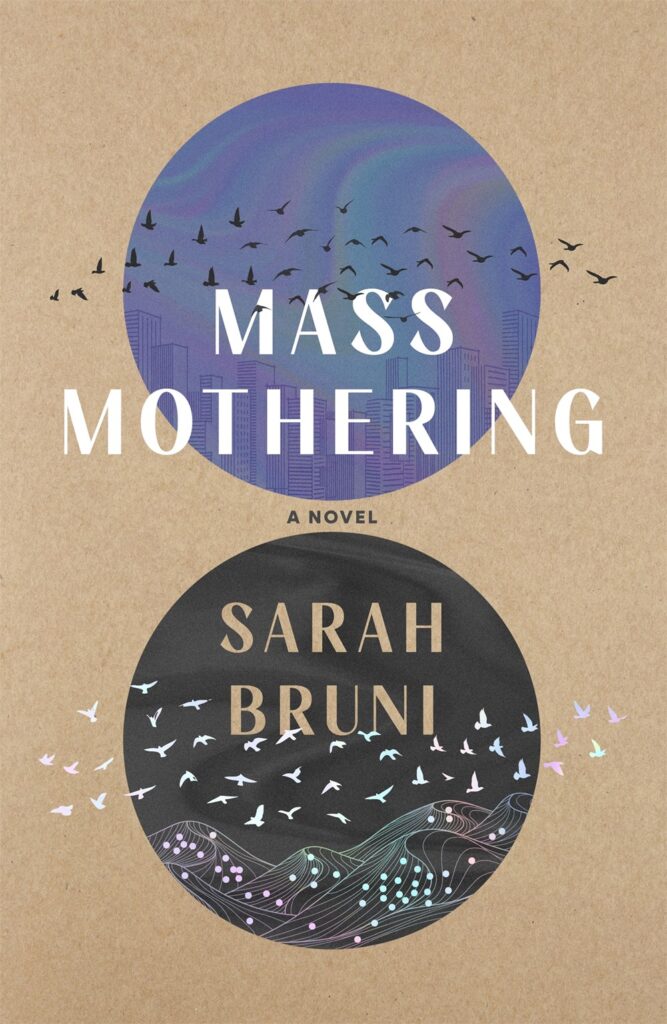
In MASS MOTHERING, Sarah Bruni writes a haunting, indelible novel of collective grief, resistance, and the radical, life-affirming virtue of testimony. In her letter to librarians, she shares how the library was a place of comfort that embraced her and inspired her to write.
Dear Librarians,
When I was a graduate student, I was given a key to my own study carrel within the Latin American Library at Tulane University. To reach it, I had to climb four flights of stairs, weave through the library collections, and unlock a door that opened to a row of tiny rooms behind glass doors—the length of a train car compartment and half as wide—each containing a desk and a window that looked down onto the campus. Most days, I woke up and spent the morning reading and writing. If the weather was good, I would install myself in the hammock on the sunporch attached to my apartment and devour books in the New Orleans sunshine. If the weather was not good, I rode my bike or hopped on the streetcar to the library.
I remember forging a different path to my study carrel in the library each day, like the Choose Your Own Adventure books from my youth, often snatching up titles to take along with me: books of history, sociology, anthropology, literature, and finally passing by the rotating exhibitions of maps, manuscripts, and art, before arriving at my desk. Sometimes I ran into a fellow student on my way, and we breathlessly exchanged news of progress on our latest readings; more often, my only company was the books in my arms. As I tore through pages or pounded out last-minute essays, I felt embraced within this impressive fortress of books and artifacts, sustained and inspired by this remarkable place.
The protagonist of my novel MASS MOTHERING, A., discovers an unfamiliar, unfinished book that she cannot stop reading, one that catalogues the actions of a group of mothers whose children go missing in a faraway, unnamed country. She reads it over and over again while recovering from a health problem, until she finds her way to the city where it was written, in search of its author and the end of the story. I wanted my novel to depict a world in which massacres exist alongside private agonies, in which refugee crises unfold within the same time and space that books are written and translated. In part, I aimed for the novel to capture how encountering a new book can unearth a world within a reader, sometimes one that rattles, compromises, subtly shifts her understanding of global events and her place within them. For this was precisely what happened to me, upon encountering the books that started me on the journey of writing this novel in the first place.
Yours,
Sarah Bruni
Author of MASS MOTHERING
Download a PDF of Sarah Bruni’s letter here!
 The owner of this website has made a commitment to accessibility and inclusion, please report any problems that you encounter using the contact form on this website. This site uses the WP ADA Compliance Check plugin to enhance accessibility.